
MDR requirements on human factors
By Horacio M Pace-Bedetti, PhD, Principal Human Factors Engineer
Question this answers
What are the human factors requirements under the EU MDR?
The EU Medical Device Regulation embeds human factors expectations into requirements regarding intended use, reasonably foreseeable misuse, ergonomic characteristics, and use environments. Manufacturers must demonstrate an understanding of real users before designs are fixed, using the IEC 62366-1 framework to connect usability engineering to risk management and provide evidence of safe, effective use.
MDR does not need a Human Factors chapter to expect Human Factors.
It does not prescribe Human Factors validation studies in the same way FDA or NMPA guidance does. But the expectation is still there. It is embedded in the way MDR talks about intended use, reasonably foreseeable misuse, use error, ergonomic characteristics, user training, user knowledge, physical characteristics, and use environments.
In other words, MDR expects you to understand the people who will use the device.
Notified Bodies are making that expectation more visible. Team-NB guidance asks manufacturers to clearly define intended users, use environments, user profiles, operating principles, and use specifications. It also points directly to IEC 62366-1 as the framework to support those activities.
So the practical question is not whether MDR “requires Human Factors.”
The practical question is whether your development process can show that you understood real users before the design was fixed.
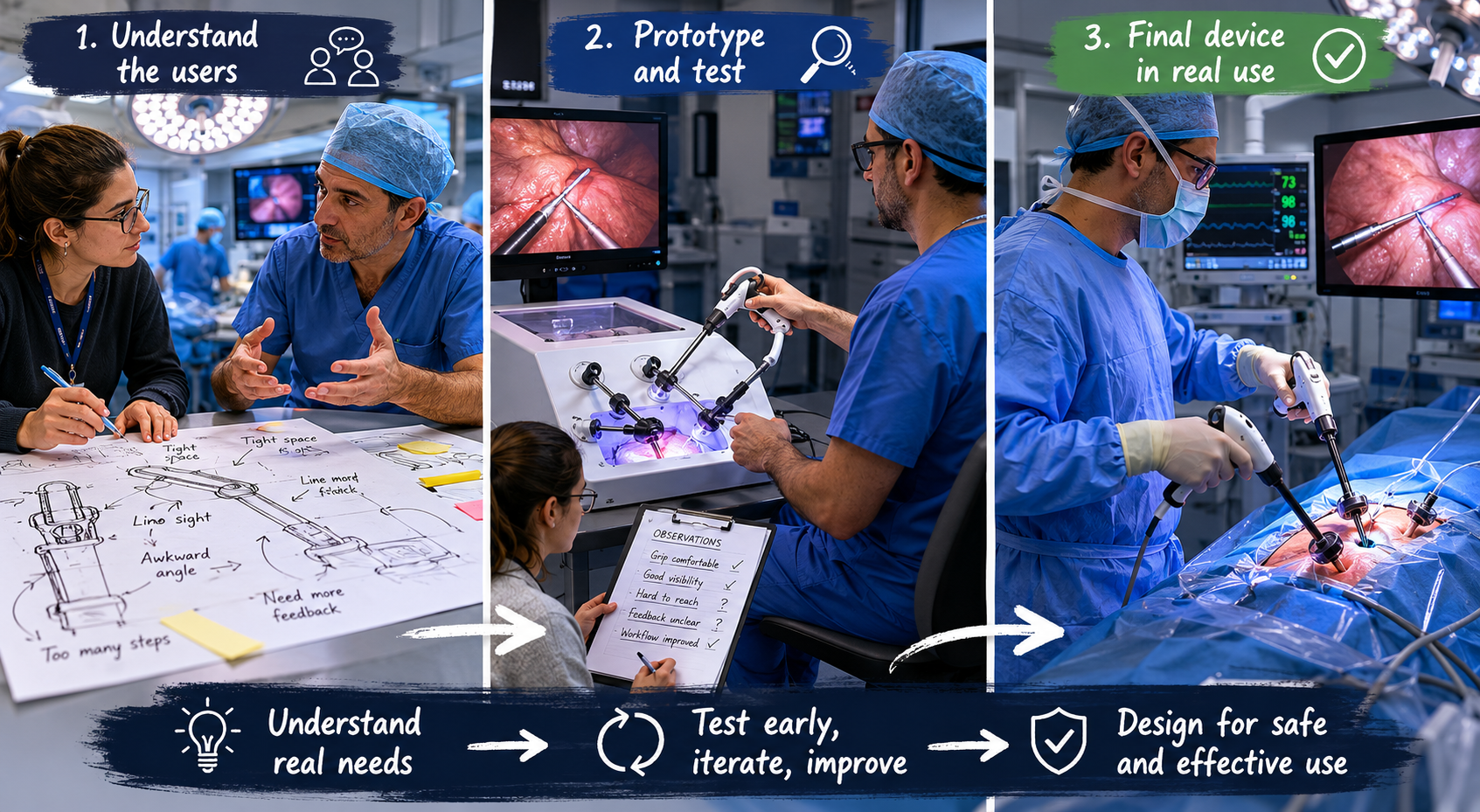
That means observing users in the environments where the device will actually be used. Understanding their workflow, constraints, assumptions, training, distractions, and workarounds.
It means turning that knowledge into a meaningful use specification, task analysis, use-related risk analysis, design inputs, formative evaluations, and design decisions.
And it means connecting usability engineering to risk management, not treating it as a separate file created at the end of development.
IEC 62366-1 is useful because it gives you a structured way to show that the device was designed with users and use-related risks in mind.
MDR is not asking for Human Factors paperwork. It is asking for evidence that the device can be used safely and effectively by the people it was designed for, in the environments where it will actually be used.
#HumanFactors #MedicalDevices #MDR #UsabilityEngineering