

Why mitigating in IFU is not a good idea
By Horacio M Pace-Bedetti, PhD, Principal Human Factors Engineer
Question this answers
Why is mitigating medical device risks through the IFU considered weak?
Mitigating use-related risks in the IFU shifts the burden onto users rather than resolving design flaws. Under IEC 62366, information for safety requires evidence that users perceive, understand, and follow instructions under pressure. Because users frequently miss or misinterpret text, relying on manuals leaves manufacturers exposed to potential use errors.
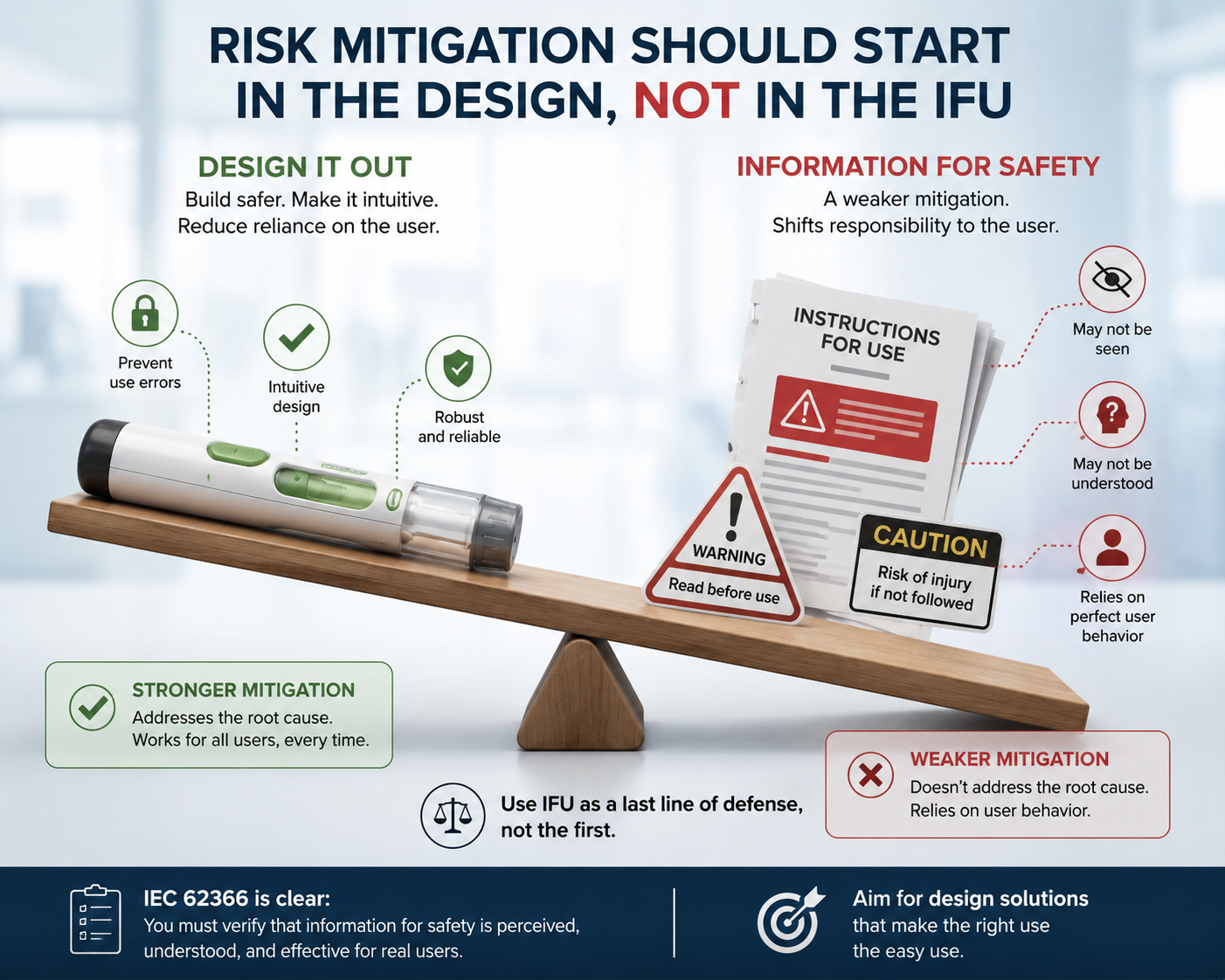
Mitigating use-related risks through IFUs or manuals can look like the easiest option. But this is usually a weak control.
It shifts the burden to the user instead of fixing the design problem. IEC 62366 treats this as “information for safety,” and the expectation is clear: you need evidence that users actually perceive it, understand it, and can use it to avoid use errors.
That often means expanding your Human Factors validation to test the warning or instruction itself. And even then, the evidence is rarely perfect. People miss information. They misinterpret it. They act under pressure.
If your main risk control is buried in the IFU, you are exposed. A stronger mitigation was probably needed earlier in the design.
#humanfactors #medicaldevices #riskmitigations #informationforsafety