

HF must understand why users do something
By Horacio M Pace-Bedetti, PhD, Principal Human Factors Engineer
Question this answers
Why is understanding user behaviour crucial in medical device human factors?
Human factors engineering requires understanding why users interact with a device in specific ways, especially when distracted, tired, or under pressure. Rather than simply documenting errors or task completion, identifying the behavioural causes behind use-related risks enables teams to design out risks and prevent safety problems before validation testing.
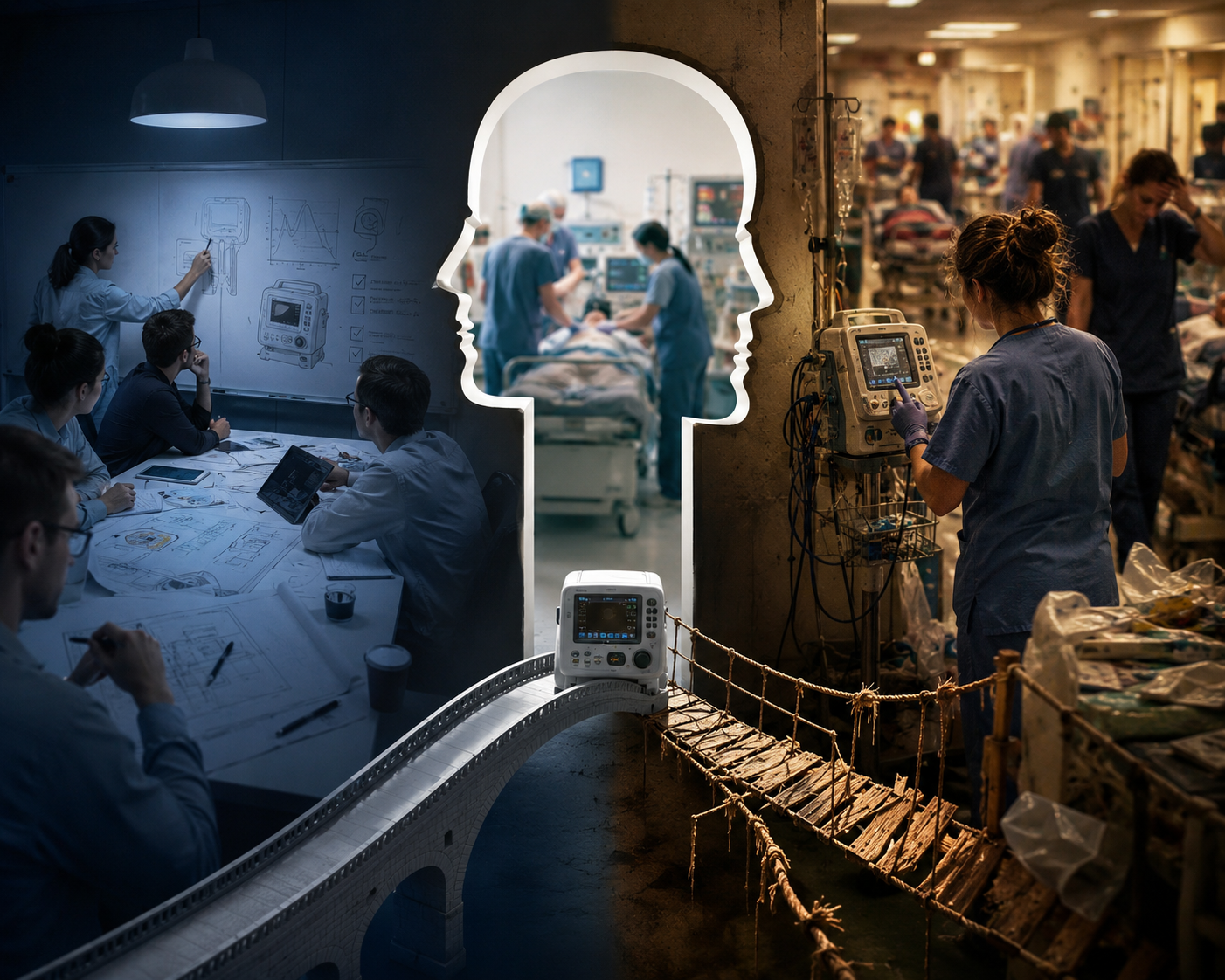
A lot of Human Factors advice in medical devices still stays too close to the method and too far from the user.
Task analyses, checklists, formative studies, validation protocols, IFU reviews. All of these are useful. But none of them are the real goal. The goal is to understand how people actually interact with a device when they are busy, distracted, tired, under pressure, poorly trained, overconfident, or trying to solve a problem in a way the design team did not expect.
That is where use-related risk usually lives.
I have seen teams fix the interface and miss the behavior behind the problem. Improve the IFU and miss the reason users were confused in the first place. Run formative studies and still not understand why users hesitate, skip steps, misuse features, or create workarounds.
In medical devices, it is not enough to know whether users can complete a task. You need to understand why they do what they do. Why they trust the device. Why they ignore a warning. Why they assume one control works like another. Why they do not read the instruction at the exact moment the team expected them to.
This is where Human Factors becomes much more than usability testing.
It is not about making the product easy to use in a study room. It is about building a clear and defensible understanding of how the device will be used by the intended users, in the intended use environments, and how the design supports safe and effective use.
The shift matters:
- From testing interfaces to understanding behavior.
- From documenting errors to explaining causes.
- From adding warnings to designing out risk.
- From “the user should know” to “the design should support.”
Standards and guidances matter. Methods matter. Documentation matters. But they are not enough if the team does not understand the human behavior behind the use-related risk.
Because in medical devices, good Human Factors is not just about running the right study.
It is about understanding users well enough to prevent the problem before validation.
#humanfactors #usability #medicaldevices #goodpractices