
Probability of occurrence. Risk vs HFE interpretation
By Horacio M Pace-Bedetti, PhD, Principal Human Factors Engineer
Question this answers
Why does human factors prioritise severity over probability for use errors?
Human factors prioritises severity over probability because reliable data on use errors is rarely available. Complaints underreport use errors, and simulated studies lack the sample size for meaningful probability calculations. Consequently, low probability cannot justify accepting a use error risk, meaning potential harm severity must drive risk mitigation decisions.
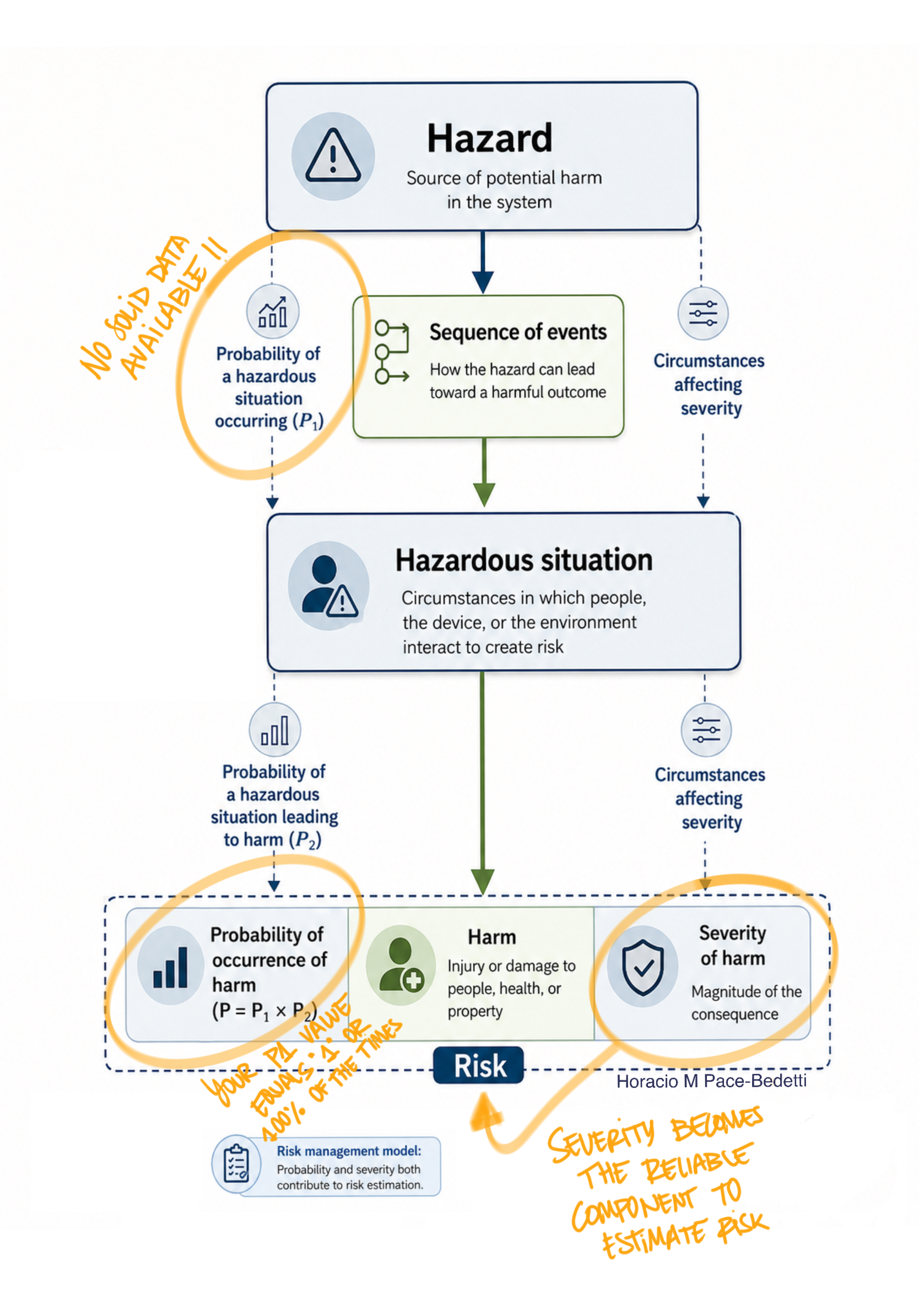
Probability of occurrence is a common fight between risk management and human factors.
ISO 14971 defines risk as the combination of probability and severity tied to a hazardous event. This is baked into almost every RAC matrix. You take your event, assign a probability number, a severity, and the matrix spits out your risk level.
Then human factors shows up and says, the focus should be on the severity of the harm, not the probability when it comes to use errors. This often confuses risk management teams. It is not that human factors professionals reject probability of occurrence. Most of us would welcome good data to refine our assessments and make them more realistic.
The problem is that reliable data on use errors is almost never available. Use errors are underreported in complaints and adverse event databases. They usually only are reported when a harm occurs, and the root cause investigation is rarely thorough enough to properly understand what occurred. On the other side, simulated studies don't have the sample size to calculate a meaningful probability that represents what would happen in real life. Even the FDA recognizes that P1 values for use errors are difficult to justify quantitatively.
This is why human factors practice does not use "low probability" as justification for accepting a use error risk. Instead, severity drives the need for risk mitigation. Some HFE professionals still use probability to contextualize findings or to prioritize further investigation, but not to eliminate action on potentially serious hazards.
If you are struggling to align HF and risk on this, remember that the lack of data is the core issue. Unless you can point to strong, relevant evidence on occurrence, severity needs to lead the conversation when it comes to use error.
#humanfactors #riskmanagement #medicaldevices