

The concept of Plain language
By Horacio M Pace-Bedetti, PhD, Principal Human Factors Engineer
Question this answers
Why is plain language important in medical device labelling?
Plain language ensures instructions, warnings, and interface text are easily understood and actionable without sacrificing accuracy. Because users may be stressed, tired, or in pain, complex terminology increases the risk of use error. Clear communication reduces cognitive effort, supports safe device use, meets regulatory expectations, and builds user confidence.
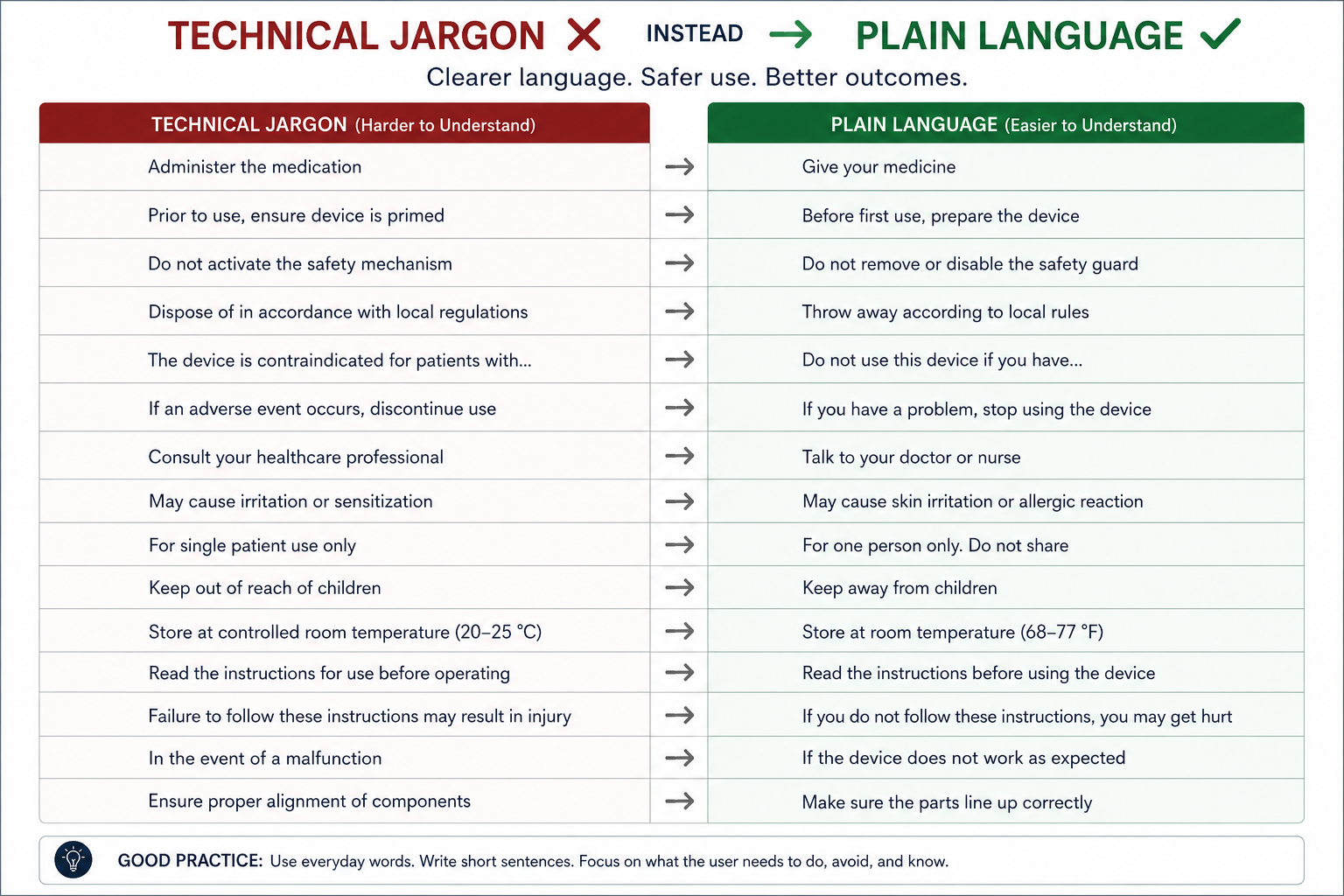
Plain language is one of those Human Factors concepts that sounds obvious until you start looking at real medical devices.
Most people agree that instructions, warnings, and user interface messages should be easy to understand. Yet it is still common to see labeling filled with technical terminology, complex sentences, or language written from the perspective of the manufacturer rather than the user.
The problem is that users do not interact with devices under ideal conditions. They may be worried, distracted, tired, in pain, or trying to remember training they received weeks earlier. In those situations, every extra piece of interpretation increases the chances of confusion and use error.
FDA has been very clear on this expectation. Instructions, labeling, and user interface text should be understandable to the intended users. For home-use devices, that generally means using everyday language and avoiding assumptions about medical knowledge or professional training.
Plain language is not about making information less accurate. It is about making information easier to understand and act upon.
A warning that users do not understand is not helping anyone. An instruction that needs to be read three times before the meaning becomes clear is probably not doing its job either.
One question I often ask when reviewing instructions is simple: Would someone unfamiliar with this device understand what they need to do, what they should avoid doing, and what to do if something goes wrong?
And even if the team believes the answer is yes, it is still worth testing with representative users. I have seen plenty of instructions that seemed perfectly clear to the development team and were interpreted very differently by actual users.
Clear communication reduces cognitive effort, supports safe use, and helps users build confidence in the device.
#humanfactors #medtech #ifu