

MedTech Human Factors for Everyone - Mental models
By Horacio M Pace-Bedetti, PhD, Principal Human Factors Engineer
Question this answers
Why are mental models important in medical device design?
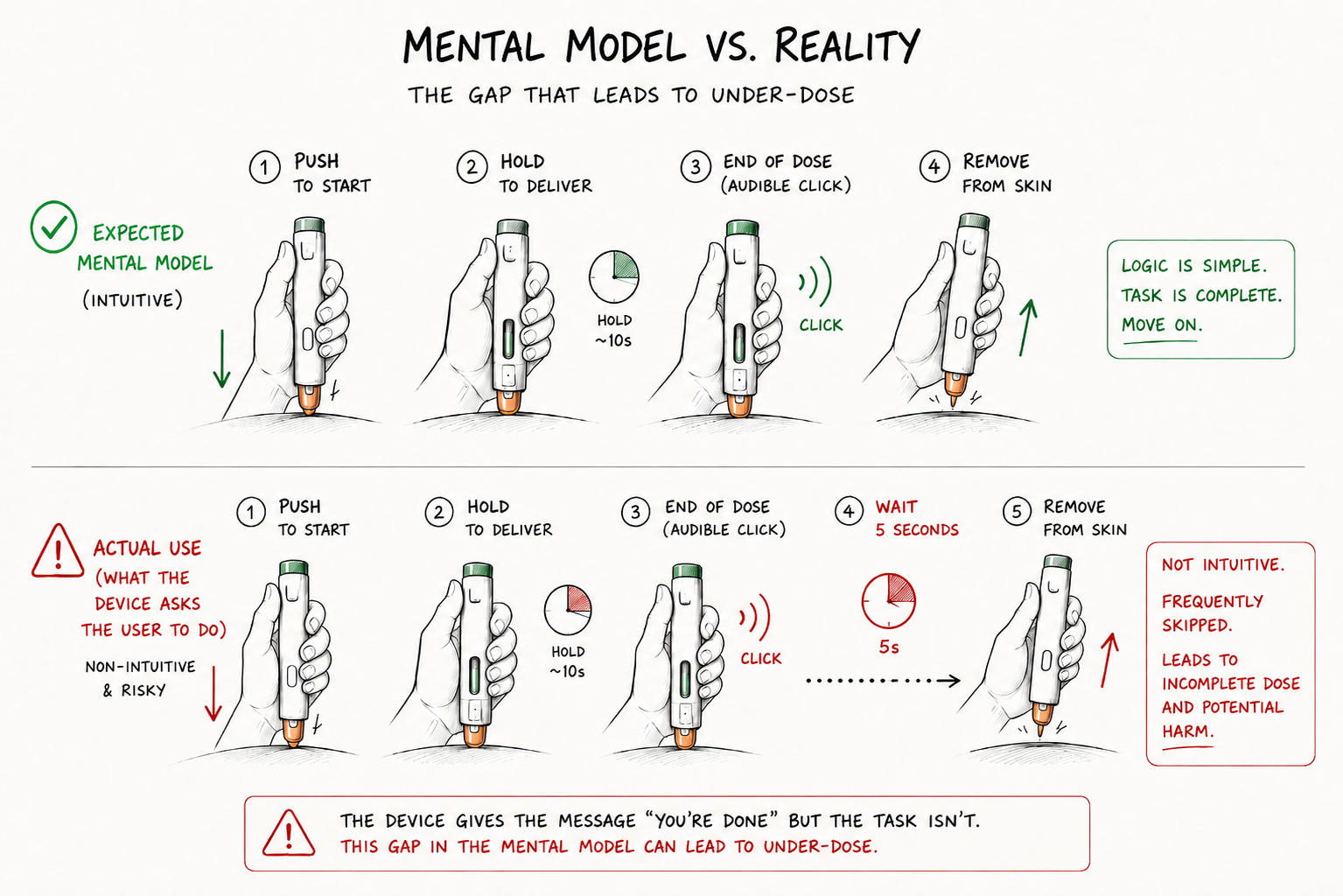
A mental model is the user's internal picture of how a system works. In medical device design, matching the layout, feedback, and behaviour to this model helps users predict outcomes and execute operational sequences accurately. Designing around the user's mental model provides essential safety, predictability, and confidence during real-world device use.
Basic Human Factors Concepts for Medical Devices: Mental Models
A mental model is the picture users have in their head of how something works. Good design keeps that picture close enough to reality so people can predict what will happen next. A flat plate on a door tells people to push. A handle tells people to pull. The design is already shaping the user’s expectation before they read anything.
Medical devices rely on the same principle, but the potential consequences of getting it wrong are much higher. Think about a reusable insulin pen. Users need to form a clear picture of the sequence: dial the dose, inject, hold, remove. If the layout, feedback, or behavior of the device does not support that picture, the steps become harder to remember and easier to perform correctly under real conditions.
Matching the device to the user’s mental model is not “nice to have.” It is safety, predictability, and confidence built into the design. If you’re curious about mental models, I suggest taking a look at the resource in the comments. Special thanks to @Charles L Mauro CHFP for providing the reference book from his amazing HF library.