

Affordances in design
By Horacio M Pace-Bedetti, PhD, Principal Human Factors Engineer
Question this answers
What are affordances in medical device design?
Affordances are design clues indicating how a device should be used, showing users what to press, pull, connect, or hold. They can be physical, visual, tactile, auditory, or digital. Effective affordances guide users directly at the point of use, reducing uncertainty and preventing potential harm without relying heavily on instructions.
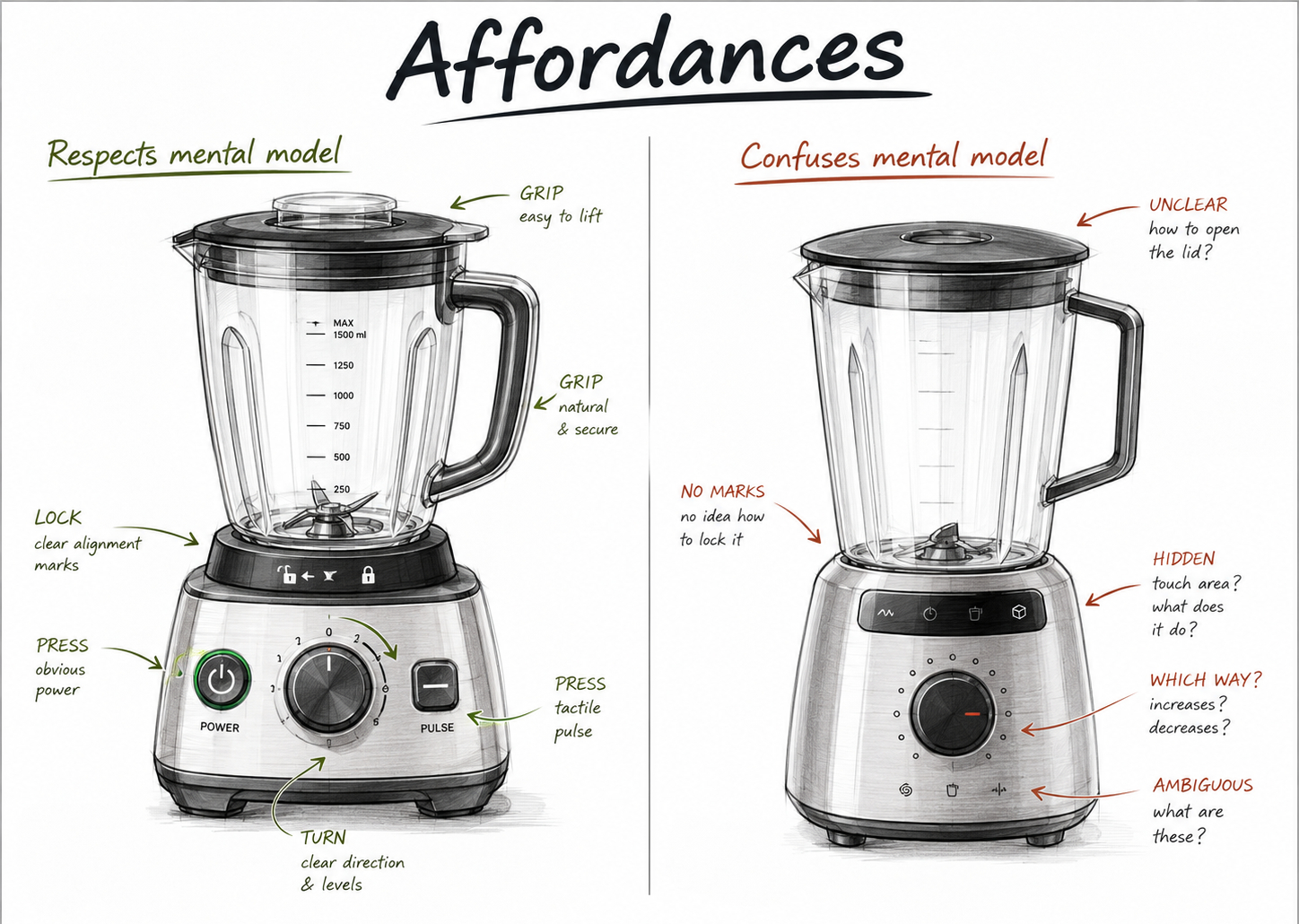
Continuing the series on basic Human Factors concepts. This one is about “affordances”.
Note: I am using the term as it is framed in ANSI/AAMI HE75 and in medical device Human Factors practice. Other fields may use it differently, but this series is focused on medical device development.
Affordances are the clues a design gives about how it should be used. They tell users what to press, pull, twist, hold, connect, read, or avoid. Think about a door. A handle suggests “pull.” A flat plate suggests “push.” A button suggests “press.” You do not need instructions because the design already gives you a clue.
In medical devices, this becomes much more important. If a user has to guess how to open a package, connect a component, press a button, turn a dose selector, or confirm that something worked, the design is already adding risk.
Affordances can be physical, visual, tactile, auditory, or digital. For example, a shape can invite grip, a connector can make the wrong connection impossible, a click can confirm that something locked, a light can show that the device is active, or a screen message can guide the next step. Poor affordances create uncertainty, which can translate into harm in the medical device world.
Users always bring mental models from other products (check the "mental model" post for explanation). They expect familiar things to behave in familiar ways. If your device looks familiar but works differently, that difference needs to be obvious through design.
The best user interfaces do not depend on the IFU to explain every basic interaction. They guide the user at the point of use.