

Consistency in design matters
By Horacio M Pace-Bedetti, PhD, Principal Human Factors Engineer
Question this answers
Why is design consistency important in medical device interfaces?
Design consistency in medical devices ensures symbols, colours, and interface cues behave predictably, allowing users to operate without unnecessary cognitive load. Inconsistent design forces users to question visual cues, increasing the risk of error. Changes to established conventions must be intentional and evidence-based, as confusion is dangerous in high-risk environments.
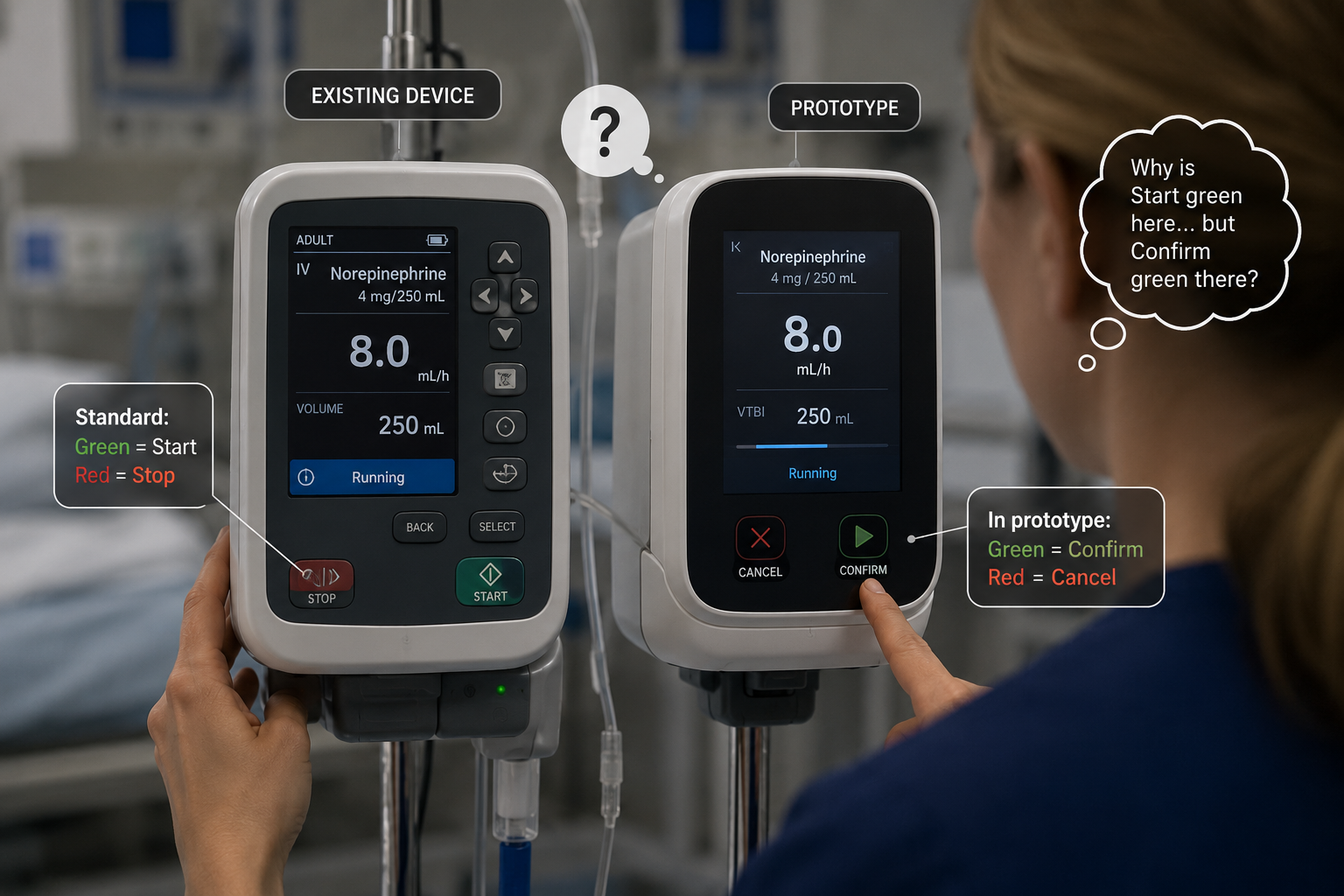
Consistency in medical device design matters. You cannot make creative interface decisions without understanding the consequences.
When symbols, colors, or interface cues behave consistently, users can operate almost on autopilot. The moment a user has to stop and ask “what does this mean here?”, you are increasing cognitive load and opening the door to error.
Before designing a new medical device, study the devices already on the market in the same category. Look at how visual cues are used to communicate actions, warnings, confirmations, and status changes. Understand what users already expect before deciding to change those conventions.
There is nothing wrong with challenging existing design patterns. But those decisions should be intentional and evidence-based, not aesthetic preferences disconnected from real-world use.
What feels innovative in consumer electronics can become dangerous in medical technology. In high-risk environments, the cost of confusion is simply too high.
#humanfactors #medicaldevices #usability
Originally published on LinkedIn.