

Timelines in Human Factors
By Horacio M Pace-Bedetti, PhD, Principal Human Factors Engineer
Question this answers
What happens if human factors is delayed in medical device development?
Postponing human factors in medical device development frequently leads to regulatory issues with the FDA. Because usability is directly tied to device design, late-stage fixes are not quick patches. They typically require interface redesigns, additional development, revised risk assessments, and further testing, resulting in substantial costs and severe project delays.
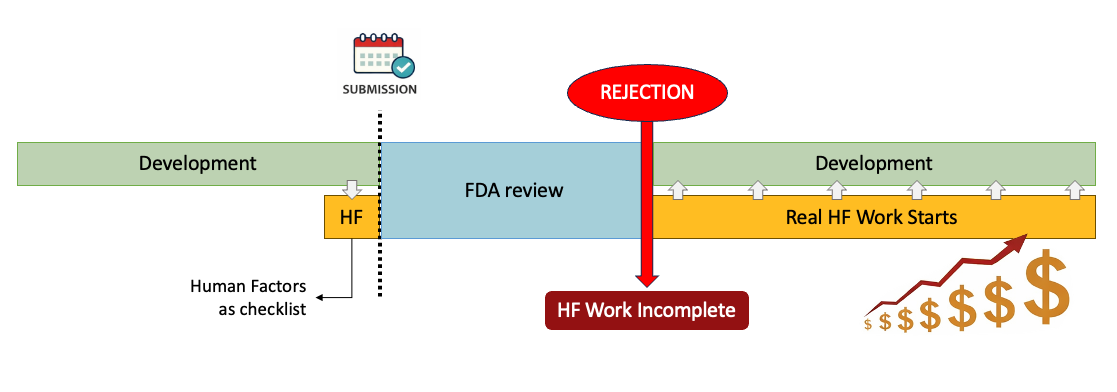
Human factors is one of the top reasons medical devices run into problems with the FDA after an initial submission. Yet many MedTech teams, especially newer companies, still postpone it or treat it as a box checking exercise.
The reality is that if HF becomes a review issue, it is rarely something you fix by flipping a switch. HF is tied directly to your design. Improving usability usually means interface changes, additional development work, updated risk assessments, and more testing. It is rarely a quick patch. If you are planning to skip HF until validation, best of luck 😱. The chances of a smooth path are very slim and, when major issues surface, the cost of fixing them late are usually substantial.
There is a reason established MedTech companies invest in dedicated HF expertise. They know HF done early may feel slow, but HF done late is usually far slower.
#HumanFactors #MedicalDevices #FDA