
Hiring late HF experts
By Horacio M Pace-Bedetti, PhD, Principal Human Factors Engineer
Question this answers
What are the risks of hiring human factors experts late in medical device development?
Hiring human factors experts after design lock leaves predictable use errors built into the system. Instead of shaping the device, late involvement forces teams into damage reduction. This frequently leads to costly redesigns, complicated instructions for use, weak risk mitigations, project timeline delays, and increased regulatory submission risk.
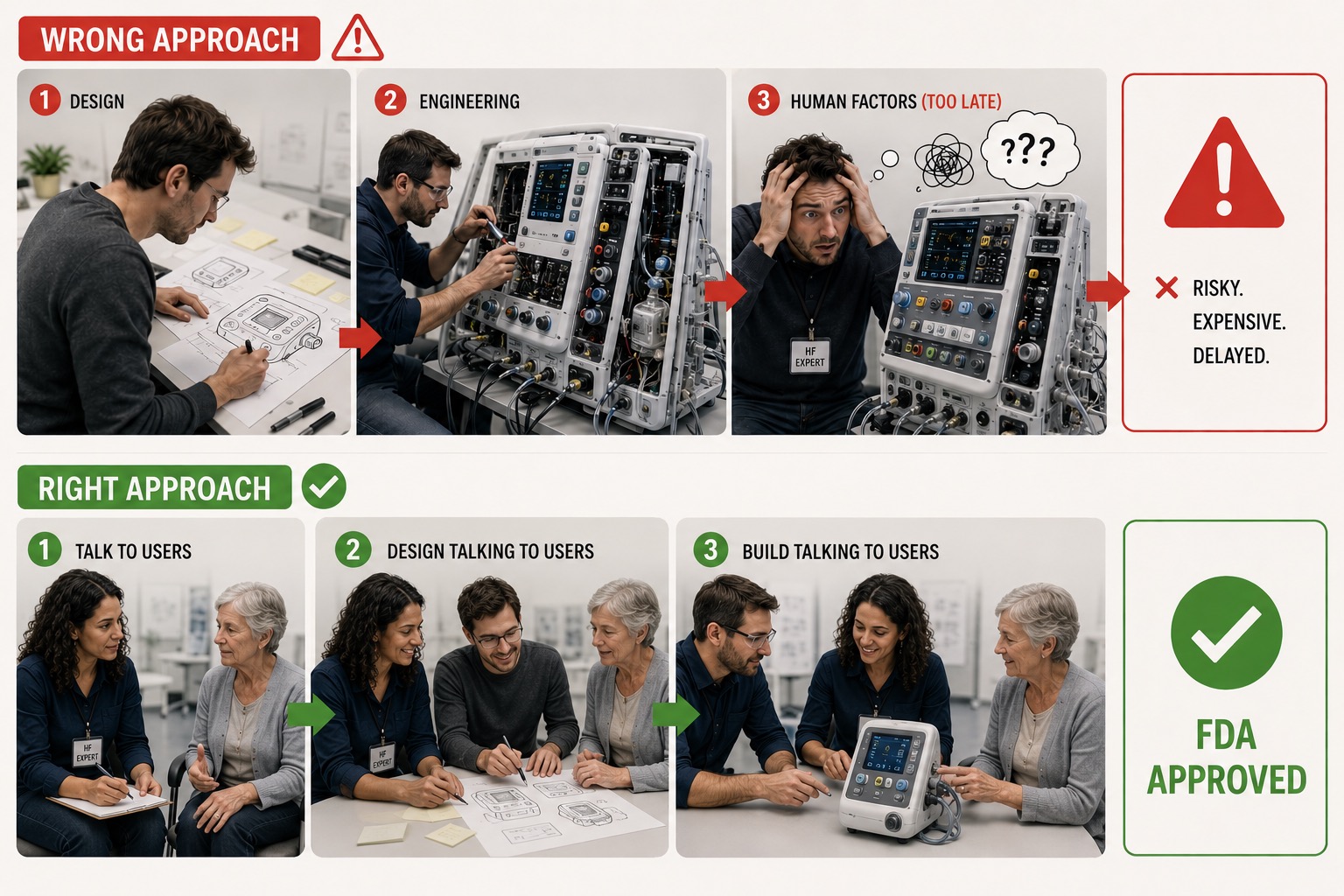
One of the biggest red flags in MedTech startups is hiring Human Factors experts only after the design is already locked. At that stage, the key assumptions have already been made, the workflows are fixed, the interface is defined, and validation is right around the corner. Human Factors is no longer shaping the device, it is just trying to reduce the damage.
This is where many companies misunderstand the role of HF. They expect someone to come in late, run a study, write a report, and somehow “de-risk” the product. But if the design decisions were made without properly understanding users, use environments, cognitive load, and predictable use errors, the problems are already built into the system. No HF expert can fix that quickly or cheaply. The result is usually redesigns, weak mitigations, complicated IFUs, delayed timelines, or increased regulatory risk.
Human Factors is not a submission activity. It is a development strategy. The companies that consistently build safer and more intuitive devices are usually the ones that integrated HF before the first major design decisions were ever made.
#humanfactors #medicaldevices #medtech