

New FDA guidance Human Factors Medical Devices
By Horacio M Pace-Bedetti, PhD, Principal Human Factors Engineer
Question this answers
What are the key updates to FDA's human factors guidance for medical devices?
The revised FDA guidance aligns human factors engineering with the Quality Management System Regulation and ISO 13485:2016. It ensures human factors outputs integrate directly into design inputs and risk controls rather than late-stage validation. Terminology is updated to match international standards, whilst specific submission reporting outlines are moved to separate guidance.
Human Factors is having a surprisingly active summer at FDA.
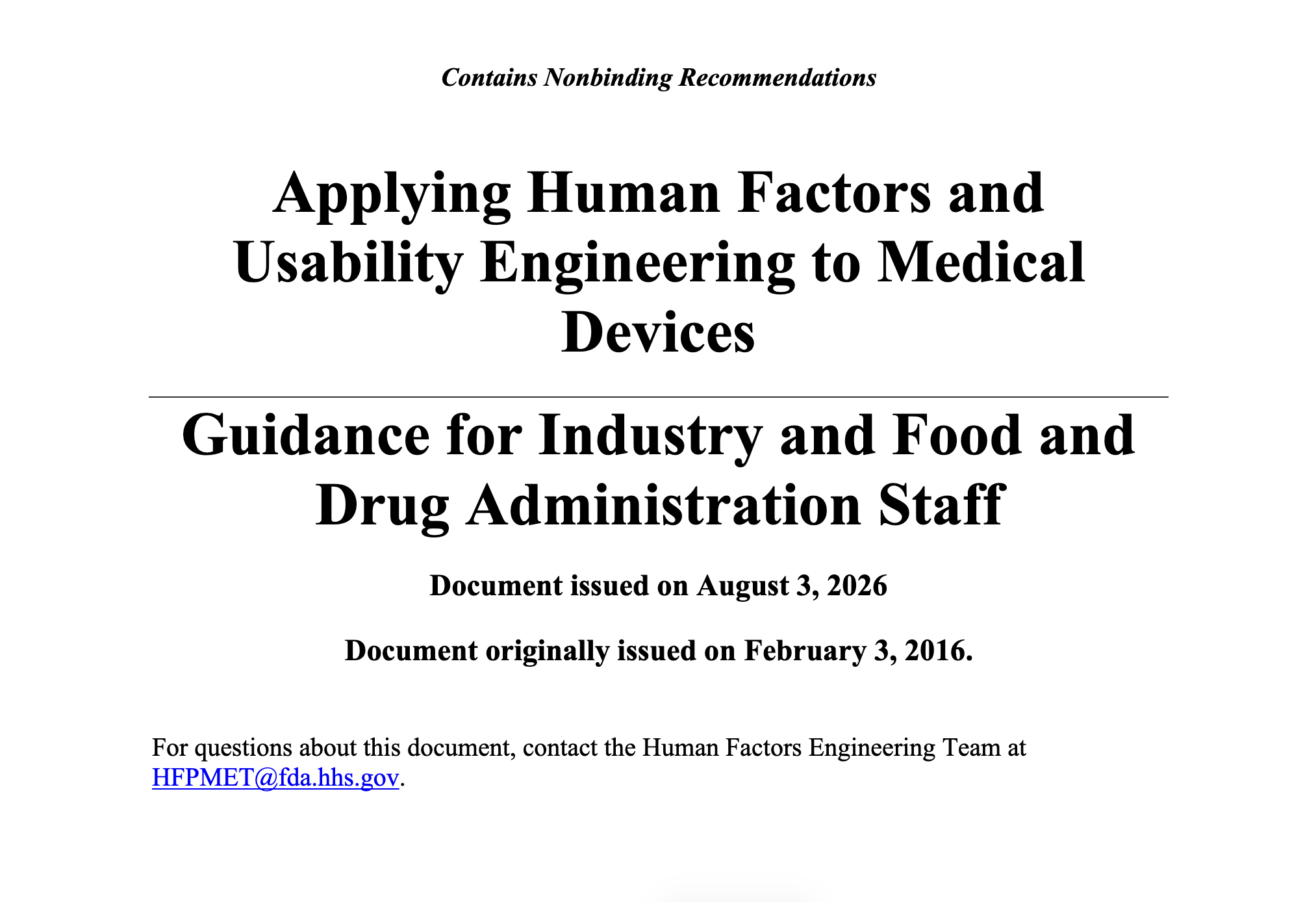
In May, FDA finalized its guidance on the Human Factors information expected in medical device marketing submissions. Now, it has revised its core Applying Human Factors and Usability Engineering to Medical Devices guidance for the first time since 2016.
One thing to be clear about up front. The original 2016 document was already final guidance. The new version, published August 2026, is a targeted revision, not a finalization of a draft from ten years ago.
The most significant update is the explicit connection to the Quality Management System Regulation and ISO 13485:2016. The guidance now states that design and development inputs must pull in applicable outputs from risk management activities and usability requirements linked to the intended use of the device.
This does not suddenly make Human Factors mandatory. Human Factors has always been embedded in FDA’s expectations for both design control and risk management. The change is that FDA is making it harder to treat Human Factors as just a late-stage validation step before submission. Human Factors outputs are supposed to flow into design inputs, risk controls, design validation, and the design and development file.
FDA has also expanded and updated definitions in the document. New terms include normal use, residual risk, serious harm, use environment, and use-related risk analysis. FDA has based several of these on IEC 62366-1:2015+A1:2020 and ISO 14971:2019, which means the terminology is now much closer to what most manufacturers see in international standards.
The HFE/UE report outline has been removed from this document. Reporting expectations now live under the separate Content of Human Factors Information in Medical Device Marketing Submissions guidance. The revised Applying Human Factors guidance is now focused on the process of Human Factors work in development, not the final report structure.
My main view: FDA has not rewritten the Human Factors engineering process. What has changed is the underlying regulatory structure, QMS terminology, definitions from the standards, and separation of evidence requirements for submissions. This alignment should make it easier for companies to manage Human Factors work as part of their core development and risk management activities, not just as a pre-submission hurdle.
#humanfactors #medtech #fda #medicaldevices